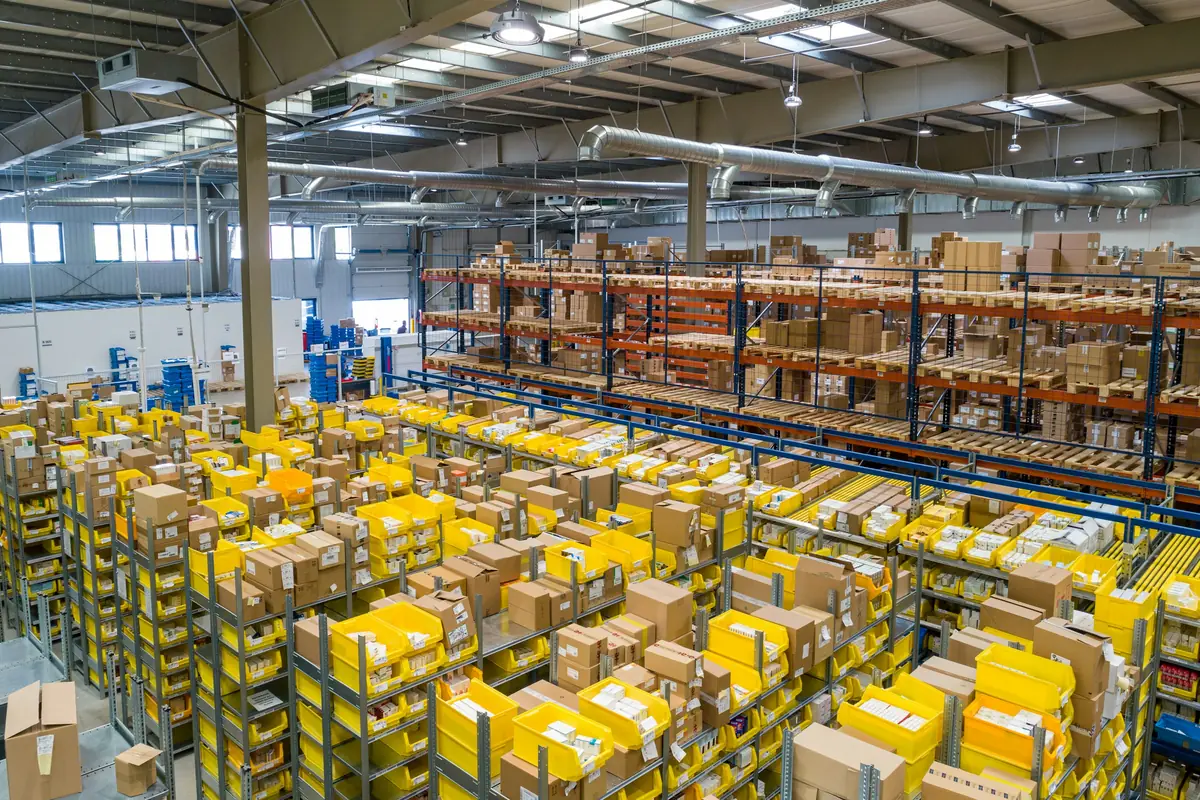
Excess inventory: what it is, why it happens and how to clear it
Excess inventory is stock you hold beyond what you can realistically sell at normal prices in a normal timeframe. It ties up cash and space and loses value every month it sits. The fix is to spot it early, stop it recurring and clear what you have through the channel that protects your brand and returns the most cash.

Every business that trades in physical products ends up with excess inventory sooner or later. A customer cancels an order. A forecast is too optimistic. The packaging changes, or the season ends early. None of it means you've run the business badly. It does mean you need a plan, because excess stock gets harder to sell every week you hold it.
What is excess inventory?
Excess inventory is stock a business holds beyond what it can sell at normal prices within a normal selling period. It still has value and can still sell, but it ties up cash, warehouse space and staff time, and it usually loses value every month it sits. Excess stock means the same thing.
You'll also hear it called excess stock, surplus inventory, overstock inventory or simply "too much inventory on hand". The terms overlap. In practice, people use them like this:
| Term | What it usually means |
|---|---|
| Excess inventory / excess stock | More than you can sell at normal prices in a reasonable time |
| Overstock | Ordered or produced more than demand, often a specific line |
| Surplus stock | Left over once a contract, season or project is finished |
| Slow-moving stock | Still selling, but well below plan |
| Obsolete or dead stock | Has effectively stopped selling, often superseded or out of fashion |
| Short-dated stock | Food or personal care nearing its best-before date |
| Discontinued stock | A line the manufacturer or retailer has stopped carrying |
The labels matter less than the direction of travel. Excess stock becomes slow stock, slow stock becomes obsolete stock, and each step costs you money. There's more on the difference in our guides to surplus stock and overstocks.
Excess inventory vs obsolete vs dead stock
The difference is whether, and how, the stock still sells.
| Excess inventory | Obsolete stock | Dead stock | |
|---|---|---|---|
| Still selling? | Yes, just not fast enough | Rarely, it's been superseded | No |
| Typical cause | Over-ordering, cancelled orders | New model, new packaging, rule change | Excess or obsolete stock left too long |
| Best move | Promote or sell as a parcel now | Sell as a parcel to channels that don't need the latest version | Parcel sale, donation or write-off |
For stock that has already stopped selling, see our page on dead stock buyers.
What causes excess inventory?
Most excess inventory comes from a gap between what was ordered and what was sold, and that gap usually has one of a handful of causes.
- Cancelled or reduced orders. A customer places a big order, then cancels or cuts it, often for reasons nobody explains. You're left holding the stock.
- Forecasting errors. Someone assumed a line would sell in volume and the market didn't agree.
- Product that never takes off. The marketing missed the right buyers, or the product and price mix was never quite right.
- Changes in packaging or labelling. New artwork, a new regulation or a rebrand can strand the old stock overnight.
- Range reviews and discontinued lines. A retailer drops your line, or you drop it yourself.
- Seasonal timing. Christmas, Easter, summer and back-to-school stock has a short window. Miss it and you wait a year.
- Minimum order quantities. Suppliers, especially overseas factories, often require more than you need.
- Supply chain over-correction. After a period of shortages, many businesses ordered heavily to be safe and then found demand had moved on.
- Business changes. A merger, a change of distributor, a closing store or a business winding up all release stock at once.
In John's words: "Every now and again, consumer-based companies run into excess stock problems, often due to reasons outside their control: cancelled orders, wrong packaging, moves in market trends."
Why is too much inventory a problem?
Too much inventory costs you cash, space, focus and value, and those costs grow the longer it sits.
The costs you can see
- Cash tied up. Every carton on the shelf is money you can't spend on stock that sells, on marketing or on paying suppliers.
- Storage. Pallet space, third-party warehouse fees, extra handling and stocktakes.
- Insurance and finance. You're insuring stock you can't sell, and possibly paying interest on the money that bought it.
The costs you can't see
- Falling value. Fashion dates, technology is superseded, food approaches its best-before date and packaging gets damaged in handling.
- Lost focus. Your team spends time trying to clear old stock instead of selling profitable new lines.
- Crowded range. Old stock takes up the space, shelf and attention that new lines need.
- Brand damage. If excess stock leaks into the wrong channels at the wrong price, it undercuts your own customers and your full-price sales.
What happens to excess inventory?
Left alone, excess inventory loses value, gets discounted harder, and is eventually written off, donated or dumped. Handled early, it's promoted, returned, or sold as a parcel to a stock buyer while it still has value. We've never seen the price of excess stock go up while it sits in a warehouse. Buyers' budgets get spent elsewhere, dates get shorter and the reason to buy it now disappears.
Can you have too little left over?
Yes, and it's a trap people don't expect. If you sell down to a few cartons of a dozen different lines, the leftovers can be harder to clear than a full pallet. Large retailers won't set up a new product in their system for a handful of units. If you can see a line won't sell through, it's often better to stop and sell the remaining quantity as one parcel while it still has some size to it.
How much inventory is too much?
Inventory is too much when a line holds well beyond its normal months of cover, or hasn't sold in 60 to 90 days. A common rule of thumb is anything over double its usual cover. The right number depends on your lead times and seasonality, so measure time to sell, not units.
Run these checks monthly, line by line:
- Months of cover. Divide stock on hand by average monthly sales. Anything well above your normal cover is a warning.
- Days since last sale. Flag anything that hasn't sold in 60 to 90 days.
- Sell-through against plan. Compare actual sales with what you forecast when you ordered.
- Date profile. For food, drink and personal care, list best-before dates and the minimum life your customers will accept.
- Inbound stock. Look at what's already on the water or on order for lines that are slowing.
- Customer signals. Range reviews, slower reorders and requests for "support" from retailers often come before cancellations.
Then sort your findings into three groups: stock to sell through normally, stock to promote now, and stock to clear as a parcel. Deciding early keeps you in control of price and timing.
How do you prevent excess inventory?
You prevent it by ordering closer to real demand and building in ways to adjust before the stock lands.
- Forecast from actual sales. Use your sales history, seasonality and known promotions, not hope.
- Share data with suppliers and customers. Joint planning with key suppliers reduces surprises on both sides.
- Negotiate flexibility. Push for smaller minimum order quantities, staged deliveries or the right to return or exchange unsold stock.
- Use inventory software properly. Most systems can flag slow movers and set reorder points. Set them up and act on the reports.
- Plan an exit for seasonal and promotional stock before you order it.
- Review range regularly. Cut tail lines before they become problems.
How do you reduce excess inventory?
You reduce excess inventory by selling it through your own channels, going back to the supplier, or selling it as a parcel, then fixing the ordering that caused it. The fastest option for a whole parcel is usually a single sale to a stock buyer.
Sell it through your own channels
- Promotions and bundles. Pair slow lines with bestsellers, run gift-with-purchase deals or limited-time offers. This keeps value but can train customers to wait for discounts if overused.
- Closed-door or staff sales. Invite your best customers to a one-off sale. It works well if you have a good database and the stock suits end consumers.
- Partner with another business. If you don't have the customer list, a business that does may run the offer for you. Stock swaps with non-competing businesses work on the same idea.
Go back up the supply chain
- Return or exchange with the supplier. Not always possible, but always worth asking, especially if you're a regular customer.
- Rework or repackage. Sometimes new labels or a different pack size turn unsaleable stock into saleable stock. Check labelling rules for food and personal care first.
Sell it online yourself
- eBay, Marketplace and B2B platforms. Fine for small quantities of end-consumer goods. You do the photos, listings, questions, packing and returns, and your stock is publicly visible at low prices. Our guide on why we don't recommend auction sites for excess stock covers the trade-offs.
Sell it as a parcel
- Auctions. Quick and simple, but the price is set on the day by whoever turns up, and you have little control over where the stock ends up.
- Clearance outlets and discount retailers. Good buyers for the right stock, but they buy what suits their range, when it suits them.
- A stock buyer. We buy the whole parcel, then resell it through our own network of buyers, with your guidelines on price and location built in. More on this below.
Give it away or write it off
- Donate it. Charities such as GIVIT accept slow-moving and obsolete stock from businesses. It's a good outcome for stock with little resale value, and it may have tax implications, so check with your accountant.
- Write it down or destroy it. The ATO's trading stock rules let businesses value stock at cost, market selling value or replacement value at year end, and there are separate rules for obsolete stock. This is a last resort, not a strategy. See our guide to writing off obsolete stock and talk to your accountant first.
What are the best excess inventory solutions?
The best excess inventory solution depends on how much stock you have, how fast you need cash and how much you need to protect your brand. For lines that still sell, promote them. For whole parcels, a stock buyer is usually fastest and most controlled.
| Option | Best for | Speed | Effort for you | Brand control | Watch out for |
|---|---|---|---|---|---|
| Promotions and bundles | Lines that still sell, just slowly | Slow to medium | Medium | High | Training customers to wait for discounts |
| Closed-door sale | Consumer goods, good customer list | Fast, one-off | Medium | High | Needs a big enough database |
| Return to supplier | Regular suppliers, recent stock | Varies | Low | High | Often refused, or credit only |
| eBay and Marketplace | Small quantities, consumer goods | Slow | High | Low | Public low prices, returns, time |
| Auction | Mixed lots, need it gone | Fast | Low to medium | Low | Price set on the day, no channel control |
| Clearance and discount retail | Branded consumer goods that suit their range | Medium | Medium | Medium | They buy on their timing, not yours |
| Stock buyer (us) | Whole parcels of any size, B2B or consumer | Fast | Low | High, we follow your guidelines | Any offer reflects the clearance market, not full wholesale |
| Donation | Low-value stock, community benefit | Fast | Low to medium | High | No cash return, check tax treatment |
| Write-off and disposal | Truly unsaleable stock | Fast | Low | High | Lose all value, disposal costs |
An excess inventory sale to your own customers keeps the most margin but only clears what they want. Most businesses use more than one option. A common pattern is to promote the best lines, sell the bulk as a parcel and donate the remainder.
How much is excess inventory worth?
It's worth what the clearance market will pay today, which is rarely what you paid for it. The price depends on the brand, the category, the quantity, the dates, the packaging condition, where the stock is and which channels you're willing to let it go to. Our guide on how much your stock is worth goes into the detail.
One thing holds almost every time: the first serious offer is usually the best one. Holding out rarely brings a higher price. Factor in your storage costs, the time your team spends on it and the risk of further damage or dating, and a fair offer today usually beats a hopeful one later.
When should you call an excess stock buyer?
Call a buyer when you have a parcel that your own channels can't clear quickly, or when you can't afford to have it seen at low prices.
That includes cancelled orders, discontinued lines, short-dated food, superseded packaging, end-of-season stock, and stock released when a business is restructuring or closing. It also includes the awkward stuff. Sometimes stock has a labelling, packaging or dating problem, or a minor fault. We're transparent about it with our buyers and can often still find a home for it.
How it works with us
We've been buying and selling excess stock for over 30 years, from our Sydney office in Parramatta. We buy from anywhere in Australia, from New Zealand and internationally.
- You send the details. A stock list spreadsheet (SKU, description, quantity, cost or RRP if you're happy to share, best-before dates), photos and where the stock is.
- We check the market. John discreetly surveys our buyers to find out what the stock is worth.
- We make an offer. In most cases, we offer to buy the whole parcel. If that isn't possible, John gives you his best advice on how to sell it.
We buy the stock ourselves and resell it to major retailers, discount chains, overseas buyers, charities, wholesalers and distributors. Each has different motivations, so we structure the deal to suit them while keeping your stock out of the channels you want to protect. We don't charge sellers fees. Collection is flexible: we can arrange it, or you can deliver, agreed per parcel. There's no minimum size. Small parcels are welcome, and sometimes they lead to big ones.
Our four guarantees
- "We strictly follow your guidelines in relation to pricing and distribution locations."
- "We send payment promptly, as per our agreed terms."
- "We place a priority focus on clearing your stock."
- "We speedily and discreetly convert your stock into cash at the highest possible price, without damaging your market position."
What we've cleared before
We've sold 37 semi-trailers of short-dated orange juice and 27 semi-trailers of a discontinued paint product. We once bought 19 containers of washing powder in New Zealand and sold them to Singapore without meeting the buyer or the seller. Another time we bought a discontinued line of glass bottles, had them filled with soft drink by a beverage company with spare capacity, and sold the finished product to a discount retailer. Anything is possible!
Smaller examples include a parcel of 43,000 packets of branded gum and 24,000 Christmas decorations. You can read more about who buys excess stock in Australia, or go straight to selling your excess stock.
The short version
- Excess inventory is stock you can't sell at normal prices in a normal time.
- It's caused by cancelled orders, forecasts, packaging changes, seasons and minimum order quantities, and many of those causes are out of your control.
- It costs cash, space, focus and brand value, and it loses value every month.
- Measure months of cover and days since last sale monthly, so you spot it early.
- Clear it through the channel that fits the stock, the timing and your brand. For whole parcels, a buyer is usually the fastest and most controlled option.
- Don't wait for the market to improve. The first good offer is usually the best one.
Too much inventory on hand?
Share the details of your stock, attach a stock list or photos if you have them, and we’ll get back to you personally.
Thank you!
If the matter is urgent please contact John Coorey directly through john@coorey.com or 0411430047.