
Who buys excess stock in Australia? Every option, compared honestly
In Australia, excess stock is bought by specialist stock buyers, clearance and discount retailers, wholesalers and exporters, liquidation auction houses, and online marketplace buyers. It can also go to staff sales, barter networks, charities and recyclers. The right choice depends on how much stock you have, how fast you need the cash and how much you care about where it ends up.
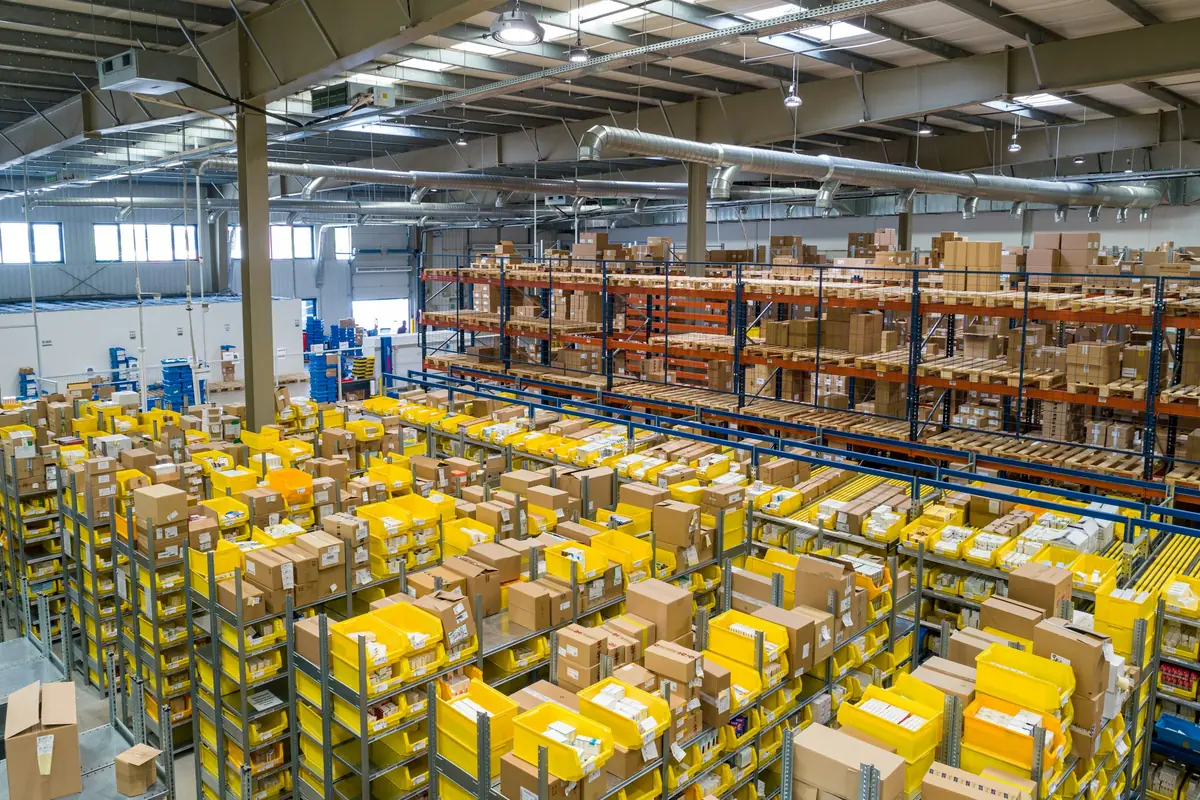
Every business that holds stock ends up with some it can't sell through its normal customers. Orders get cancelled, packaging changes, a buyer leaves, a trend moves on. The question is who will take it off your hands, and on what terms.
There are more options than most people realise, and each suits a different kind of seller. Below is every type of excess stock buyer in Australia, what they're good at, and where they fall short. We're one of these options, a specialist stock buyer, and we'll tell you honestly when another option is the better choice.
Which buyers and channels are there for excess stock?
There are nine main channels, from buyers who take a whole parcel in one deal to options where you sell or give it away a unit at a time.
- Specialist stock buyers
- Clearance and discount retailers
- Wholesalers, distributors and exporters
- Liquidation auction houses
- Online marketplaces (eBay, Facebook Marketplace, Amazon)
- Staff and warehouse sales
- Barter networks
- Charities and product-donation platforms (such as GIVIT and Good360 Australia)
- Recycling
How do the options compare?
Here's the short version. "Effort" means your own time and staff. "Brand risk" means the chance your product turns up somewhere that hurts your regular pricing or your retail customers.
| Channel | Speed | Price to you | Your effort | Brand risk | Best suited to |
|---|---|---|---|---|---|
| Specialist stock buyer | Fast, one deal | Fair market for the whole parcel | Low | Low if conditions are agreed in writing | Any size parcel, mixed lines, sellers who want control |
| Clearance and discount retailers | Slow to get a meeting | Can be good for the right lines | Medium to high | Medium (your product on their shelf at their price) | Big, clean, well-known lines that suit their range |
| Wholesalers and exporters | Moderate | Varies widely | Medium | Low to medium; export can be very low | Large volumes, products that travel well |
| Liquidation auction houses | Fast to list, timing set by the auction | Unpredictable | Low to medium | High (no control over who buys) | Administrators, equipment, mixed lots |
| Online marketplaces | Slow, unit by unit | Retail-ish per unit, less fees and time | High | High | Small quantities, low-value tails |
| Staff and warehouse sales | Quick for a day or two | Low per unit | Medium | Low to medium | Goodwill, small leftover quantities |
| Barter networks | Moderate | Trade credit, not cash | Medium | Medium | Businesses that will spend the credit |
| Charities and donation platforms | Moderate | No cash (may have tax effects) | Low to medium | Low | Usable goods you can't or won't sell |
| Recycling | Fast once arranged | Usually a cost | Medium | Very low | Unsaleable, unsafe or expired goods |
Specialist stock buyers: what do they do?
A specialist stock buyer buys your excess, discontinued, short-dated or liquidation stock outright, then resells it through its own network of buyers. That's what we do.
The appeal is that it's one conversation and one deal. You don't have to find twenty buyers, ship to each, chase payment or answer questions about why your product is on special. We sell to major retailers, discount chains, overseas buyers, charities, wholesalers and distributors. Each of them wants something different, so we structure the offer to suit them while keeping your stock away from the channels you want to protect.
How it works with us:
- You send the details: a stock list spreadsheet, photos, quantities, dates and location.
- John discreetly surveys the market to find out what the stock is worth.
- In most cases, he makes an offer to buy all of it.
If buying the whole parcel isn't possible, he gives his best advice on how to sell it. We buy from anywhere in Australia, from New Zealand and internationally, and collection is flexible and agreed per parcel.
Where a stock buyer falls short: if you have a strong, current line and months to spare, you might do better selling it yourself into a single discount chain. A stock buyer earns a margin for taking the risk and the work. You're trading some of the upside for speed, certainty and control. For a closer look at what that trade-off means in dollars, read how stock buyers work out what your stock is worth.
Should I go straight to a discount or clearance retailer?
You can, and for a large, clean, well-known line it can work well. Discount chains and clearance retailers buy opportunistically, and if your product fits their range and timing, they may pay a sound price.
The catch is access. As John puts it from experience, a department-store purchasing manager receives 200 to 300 emails a day. Cold approaches get lost. Buyers also have category space, budgets and timing to juggle: "One buyer might say the market is lousy, another buyer might not have any space left in your category." If they say yes, they'll usually want the stock delivered to their distribution centre, on their paperwork and on their payment terms.
They also sell it in Australia, at their price, under their own signage. If you supply full-price retailers, that's the scenario you most need to think through. Our guide to protecting your brand when clearing stock covers how to set conditions.
What about wholesalers, distributors and exporters?
Wholesalers and exporters buy in volume to resell to their own customers, often in a different market or region. That can be ideal when you want stock gone without it competing in your local market.
Export suits products that travel well and don't rely on Australian-only labelling. It does add work: shipping, documents and sometimes relabelling for the destination market. A seller dealing with an exporter directly needs to be confident about payment terms and about where the goods will actually end up. Some "export" stock has a way of coming home.
Are liquidation auctions a good way to sell stock?
They're fast and simple to arrange, but the price is unpredictable and you give up control over who buys. Auction houses are a natural fit for administrators clearing equipment and mixed lots, and for stock where brand protection doesn't matter.
For branded consumer goods, the trade buyers at auctions are often the same people who then list the stock online at heavy discounts. If your regular retail customers find your product being given away, that conversation won't be fun. We work closely with administrators and liquidators who want a single buyer for stock instead. See our page for administrators and liquidators.
Can I sell excess stock on eBay, Facebook Marketplace or Amazon?
Yes, and for small quantities it can return a decent price per unit. The cost is time: photographing, listing, answering questions, packing, posting, handling returns and paying platform fees. Those fees and that time add up quickly once you're dealing with hundreds of units.
Marketplaces also put your product, at a discount, in front of exactly the customers your retailers are trying to sell to. We've written more about the drawbacks in why not to sell excess stock on online auction sites.
When marketplaces are the better choice: a few dozen units of a low-value tail, no retail customers to upset, and someone in the business with spare time.
Do staff and warehouse sales work?
They're good for goodwill and for clearing small leftovers, not for moving a serious parcel. A staff sale can shift a few pallets of mixed goods quickly and costs little to run.
Public warehouse sales draw crowds but need staff, security, payment handling and a clean-up plan. Anything left at the end still has to go somewhere. Also be aware that some of the shoppers will be resellers.
Are barter networks worth it?
Only if you'll actually spend the trade credit. Barter networks let you swap stock for credits you spend with other members on goods and services. That's useful if the network has suppliers you'd pay cash to anyway.
The trade-offs: you get credit, not cash, there are usually membership and transaction fees, and you don't control where the stock is resold. Check the tax and GST treatment with your accountant before you join.
How do charities and product-donation platforms work?
Donation platforms connect businesses that have goods with charities that need them, and they're a good option for usable stock you can't or won't sell. Two well-known Australian ones work differently.
- GIVIT works on requests. Support organisations post the specific items they need, and GIVIT connects a donor who has a requested item with that organisation to arrange delivery or collection. It suits stock that matches a specific need.
- Good360 Australia is a matchmaker for businesses' brand-new surplus goods. Eligible charities and community organisations request the goods they need. Check Good360's current eligibility and fees before you rely on it.
Donating doesn't put cash in your bank, but it can have tax consequences. The ATO explains that donated trading stock may be deductible, with rules about market value and assessable income. Talk to your accountant before assuming a benefit. Our guide to writing off obsolete stock explains the general rules.
We also sell to charities ourselves, so donation and a sale aren't always either/or.
When is recycling the right answer?
When the stock genuinely can't be sold or given away safely, for example recalled goods, unsafe items or food past its use-by date. Recycling is usually a cost, not a return, but it closes the matter cleanly and keeps the product out of every channel.
Before you pay to recycle, check that the stock really is unsaleable. Short-dated food, outdated packaging and discontinued lines often still have buyers. We've sold 37 semi-trailers of short-dated orange juice and 27 semi-trailers of a discontinued paint product.
How do I pick a stock buyer I can trust?
Ask direct questions and judge the answers. A trustworthy buyer will be happy to put the important points in writing.
- Do you buy the stock yourself, or are you brokering it? A broker may charge you fees and leave you holding the stock if no one bites. We buy the parcel ourselves.
- Do you charge me anything? Find out about commissions, listing fees or "valuation" fees before you send anything.
- Will you buy the whole parcel, or cherry-pick? A buyer who takes only the best lines leaves you with the hard part.
- Where will my stock be sold? Ask which channels and regions, and whether they'll agree in writing to keep it out of the ones you name.
- Will you follow my pricing guidelines? Get it in the contract.
- When and how do you pay? Agree terms up front, and check the buyer can meet them.
- Who collects it and who pays freight? Make sure everyone has the same understanding of the pickup.
- How long have you been doing this, and can you show past deals? Experience matters in this trade. We've been buying and selling excess stock for over 30 years, and our case studies show the kinds of parcels we handle.
- What happens if something's wrong with the stock? You want a buyer who deals honestly with faults rather than one who renegotiates on the loading dock.
Our own four guarantees are what we think every seller should expect:
"We strictly follow your guidelines in relation to pricing and distribution locations." "We send payment promptly, as per our agreed terms." "We place a priority focus on clearing your stock." "We speedily and discreetly convert your stock into cash at the highest possible price, without damaging your market position."
What should I send to get an offer?
Send enough for a buyer to understand the parcel without a site visit:
- a stock list spreadsheet with SKU, description, quantity, cost or RRP if you're happy to share it, and best-before dates where relevant
- photos of the product, the packaging and the pallets
- where the stock is located.
You can send it through our contact page or read more about how selling excess stock to us works. In thirty years John has seen almost everything at least twice. Anything is possible!
Want one buyer for the whole parcel?
Share the details of your stock, attach a stock list or photos if you have them, and we’ll get back to you personally.
Thank you!
If the matter is urgent please contact John Coorey directly through john@coorey.com or 0411430047.