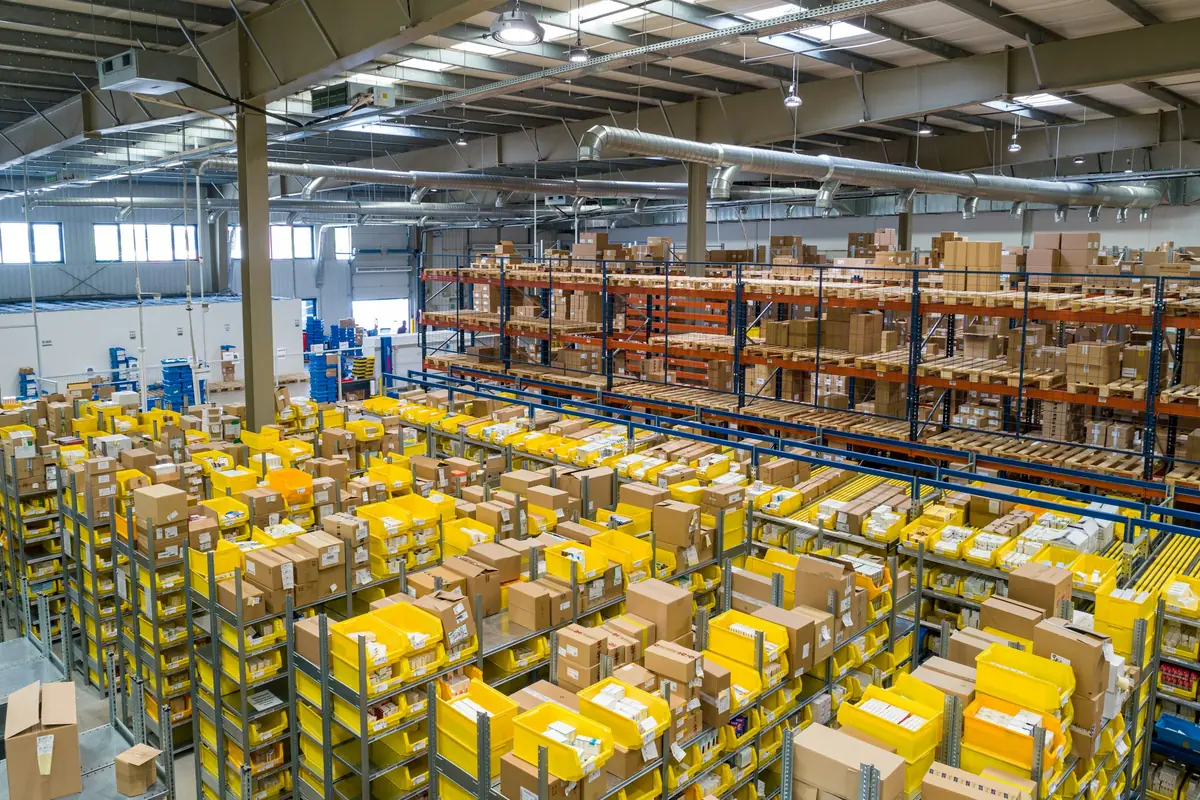
Clearance vs liquidation: what's the difference, and what does liquidating stock mean?
A clearance is a business choosing to sell off stock it no longer wants, usually at a discount, while it keeps trading. Liquidation stock is stock sold off in bulk, quickly, often because a company is being wound up or must turn goods into cash fast. Company liquidation is a formal legal process run by a liquidator; liquidating stock just means converting it to cash.
People use "clearance" and "liquidation" as if they mean the same thing. They overlap, but they're not the same, and mixing them up can cause real confusion, especially when one of them is also the name of a legal process for winding up a company.
Here's the plain-English difference, followed by a glossary of the stock terms you'll hear in this trade.
What's the difference between clearance and liquidation?
Clearance is about getting rid of particular stock; liquidation is about turning stock into cash, often all of it and often fast.
| Stock clearance | Stock liquidation | |
|---|---|---|
| Why it happens | The business wants space, cash or a fresh range | The business needs cash quickly, is closing, or is in a formal insolvency |
| What's sold | Selected lines: slow, seasonal, discontinued | Often the whole inventory, or large parcels |
| Who buys | Often the public, through sales and markdowns, or trade buyers | Usually trade buyers: stock buyers, wholesalers, auction houses |
| Speed | Planned, can run over weeks or months | Usually fast |
| Business afterwards | Keeps trading | May keep trading, or may be closing |
A clearance can lead to liquidation if the stock doesn't move. And a business can "liquidate" a parcel of stock, meaning sell it in bulk for cash, without the company itself going anywhere near liquidation.
What does it mean to liquidate stock?
To liquidate stock means to convert it into cash, usually by selling it in bulk to a trade buyer rather than one unit at a time. "Liquid" here means cash. A business might liquidate a line that won't sell through, a warehouse full of discontinued product, or everything it holds before closing.
What is liquidation stock?
Liquidation stock is stock sold off in bulk to raise cash quickly. The phrase often refers to goods from a business that's closing or in a formal insolvency, but it's also used for any parcel sold off fast and in one lot. Most of it is good, saleable product. Our guide to liquidation stock goes into more depth.
Is company liquidation the same as liquidating stock?
No. Company liquidation is a formal legal process in which a liquidator is appointed to wind up a company, sell its assets and distribute the proceeds. Liquidating stock is just selling it for cash.
If a company is in liquidation, the liquidator controls the stock and decides how it's sold. ASIC has general information on winding up an insolvent company, and an insolvency practitioner can explain what applies to you. We don't give insolvency advice. We do work closely with administrators and liquidators, and they like working with us. See our page for administrators and liquidators and our guide to company liquidation.
What do all the stock terms mean?
Here are the terms you'll hear, what they mean in practice, and where to read more.
| Term | What it means | Read more |
|---|---|---|
| Clearance | Selling off particular stock you no longer want, often at a discount, while the business keeps trading | Sell excess stock |
| Liquidation stock | Stock sold in bulk to raise cash quickly, often from a closing or insolvent business | Liquidation stock |
| Company liquidation | A formal legal process to wind up a company, run by a liquidator | Company liquidation |
| Excess stock | Stock beyond what you can sell through your normal channels in a reasonable time | Excess stock |
| Excess inventory | Another name for excess stock, common in finance and supply-chain teams | Excess inventory |
| Surplus stock | Stock left over after demand is met, for example after a contract ends or an order is cut | Surplus stock |
| Overstock | Stock ordered or made in larger quantities than the market took | Overstocks |
| Dead stock | Stock that hasn't sold for a long time and isn't expected to | Dead stock buyers |
| Obsolete stock | Stock that's been superseded or can't be sold in its intended market, which may affect its tax value | Write off obsolete stock |
| Discontinued stock | A line the maker or retailer has stopped, leaving remaining units | Discontinued stock buyers |
| Short-dated stock | Stock close to its best-before or expiry date | Short-dated stock buyers |
| Job lot | A mixed parcel sold together as one lot, often with odd sizes, colours or lines | Job lot shoe parcel |
| End of line | The last of a range, often before a new version or packaging change | Discontinued stock buyers |
| Bankrupt stock | Stock from a person or business that has gone bankrupt, sold off as part of the process | Bankrupt stock |
People often say "bankrupt" about any failed business, but in Australia bankruptcy formally applies to individuals and liquidation to companies. Your accountant or an insolvency practitioner can explain which applies.
Why do businesses end up liquidating stock?
For the same handful of reasons, over and over. In thirty years we've seen most of them more than once.
- Cancelled or cut orders. A retailer reduces an order after the stock has been made or shipped.
- Range reviews. A chain deletes a line, and the supplier is left with everything in the pipeline.
- Packaging and labelling changes. New artwork, new regulations or a rebrand make the old stock awkward to sell in the usual channels.
- Dates. Food, health and beauty products get closer to their best-before or expiry dates.
- Seasons. Christmas, Easter, summer and back-to-school stock that missed its window.
- Minimum order quantities. A factory's minimum run was more than the market needed.
- Closures and insolvency. A store, division or whole company closes, and everything has to go.
Only the last one involves company liquidation. The rest are ordinary trading, and liquidating the stock is simply the sensible way to get the cash back. We've sold 37 semi-trailers of short-dated orange juice and 27 semi-trailers of a discontinued paint product, and neither came from a company in liquidation.
How does liquidating stock work in practice?
For a business selling a parcel to a stock buyer, it's usually a short process.
- Gather the details. A stock list spreadsheet with SKU, description, quantity, cost or RRP if you're happy to share, and best-before dates. Add photos and the location.
- Decide your conditions. Which channels and regions must the stock stay out of? Our guide to protecting your brand when clearing stock helps.
- Get an offer. We survey the market discreetly and, in most cases, offer to buy all of it.
- Agree terms. Price, payment terms, collection or delivery, and your conditions, in writing.
- Hand over the stock. Collection is flexible and agreed per parcel.
If the company is in formal liquidation or administration, the same steps apply, but the appointed practitioner makes the decisions.
Why does the wording matter?
Because it shapes what buyers think they're getting, and what price they'll offer. Call ordinary overstock "liquidation stock" and some buyers will assume you're desperate. Call short-dated food "excess stock" and a buyer might not ask about dates until the truck arrives.
Be accurate and specific. Tell the buyer what the stock is, why you have it, its dates and condition, and how soon you need it gone. Our guide on how much your stock is worth explains how each of those affects the offer.
Is liquidation stock a bargain for buyers?
Often, which is exactly why there's a market for it. Discount chains, wholesalers, exporters and charities buy liquidation stock because they can pass on good product at a lower price. That demand is what turns a seller's problem into cash.
It also explains why the right buyer matters. Each type of buyer has different motivations: one needs volume, another needs a particular category, another needs stock for an overseas market. We sell to major retailers, discount chains, overseas buyers, charities, wholesalers and distributors, and structure each deal to suit them while keeping your stock away from the channels you want to protect. Some of the parcels we've handled include 19 containers of washing powder bought in New Zealand and sold to Singapore, and a discontinued line of glass bottles we had filled with soft drink and sold to a discount retailer.
Which is better for my business: a clearance sale or selling the parcel?
It depends on the quantity, the time you have and how much you care about your brand. A public clearance in your own stores or online can return more per unit, but it takes time, needs staff and puts discounted product in front of your regular customers.
Selling the whole parcel to a stock buyer is faster, takes one conversation and can be done with conditions that keep stock away from the channels you want to protect. Our guide to who buys excess stock in Australia compares all the options.
What should I send to get an offer?
Whatever you call your stock, send a stock list spreadsheet (SKU, description, quantity, cost or RRP if you're happy to share, best-before dates), photos and the location through our contact page. John will discreetly survey the market and, in most cases, make an offer to buy all of it. We've been doing this for over 30 years, from Sydney, for sellers across Australia, New Zealand and overseas.
Whatever you call it, we'll look at it
Share the details of your stock, attach a stock list or photos if you have them, and we’ll get back to you personally.
Thank you!
If the matter is urgent please contact John Coorey directly through john@coorey.com or 0411430047.